

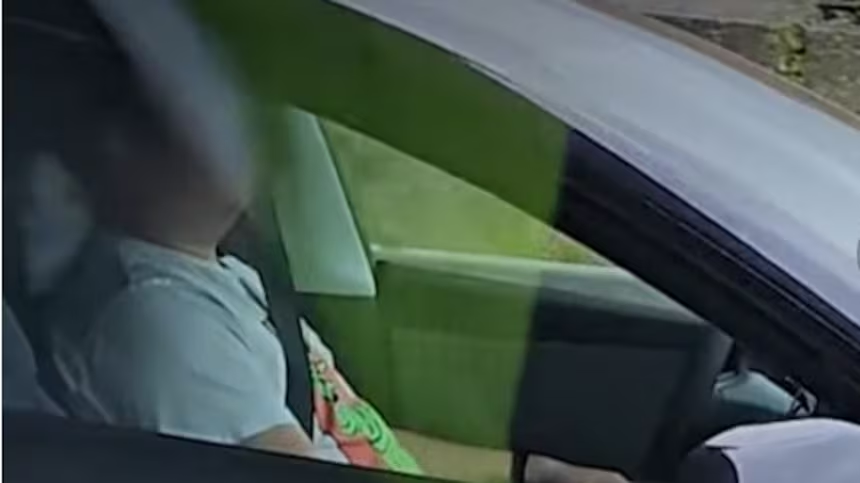
British Columbia police have renewed warnings about the dangers of sleeping behind the wheel after two drivers were caught apparently asleep while travelling in Tesla vehicles along the Trans-Canada Highway.
The incidents have raised fresh concerns about motorists relying too heavily on driver-assistance technology, with police stressing that current self-driving systems do not make it legal or safe for drivers to abandon control of their vehicles.
B.C. Highway Patrol (BCHP) Sgt. Michael McLaughlin said officers would not engage in arguments with motorists about the capabilities of self-driving technology.
“Police will not debate the merits of self-driving technology with sleeping drivers. It’s illegal in B.C., and we’re here to enforce the law and keep roads safe,” McLaughlin said.
According to the BCHP, an officer encountered one of the drivers on Aug. 27 while travelling along the Trans-Canada Highway through Langley.
READ ALSO: First Lady Pushes NIN Registration for Better Planning
The officer reportedly passed a dark-coloured Tesla travelling at highway speed and observed the driver asleep behind the wheel.
The incident was captured on video, according to police, highlighting the risks associated with motorists treating automated driving features as a substitute for remaining alert and ready to take control.

The second incident involved another Tesla driver who was also recorded apparently sleeping while the vehicle was travelling on the Trans-Canada Highway in the Lower Mainland.
Police said the incidents demonstrate why drivers must remain attentive even when using vehicles equipped with advanced driver-assistance systems.
Tesla vehicles sold in Canada include systems that can assist with steering, acceleration and braking under certain conditions. However, drivers are expected to monitor the vehicle and remain prepared to intervene.
The BCHP’s warning comes as automakers continue developing increasingly sophisticated automated-driving technologies and consumers become more familiar with features marketed around hands-free or assisted driving.
Police, however, emphasized that technology does not remove a driver’s legal responsibility for operating a vehicle safely.
For motorists, the message is straightforward: driver-assistance technology should not be treated as permission to sleep, disengage or stop monitoring the road.
The BCHP said officers would continue enforcing provincial traffic laws and taking action against behaviour that puts other road users at risk.
The incidents also serve as a reminder that even when a vehicle is capable of performing many driving tasks, responsibility for safe operation remains with the person behind the wheel.