
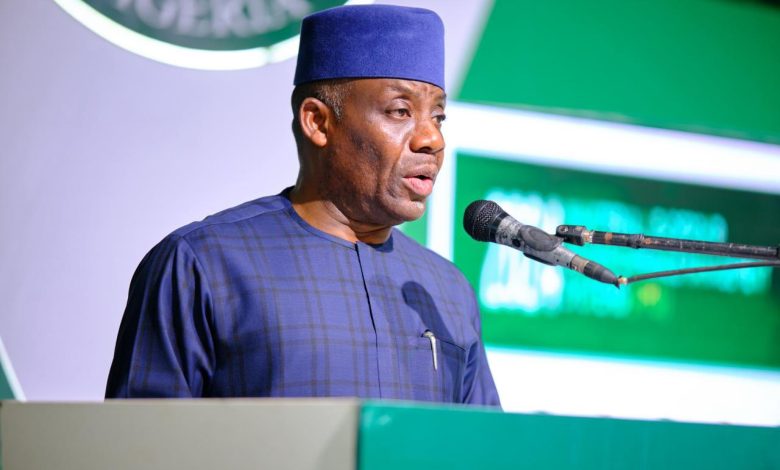
The Federal Government has announced plans to institutionalise the National Learning Assessment (NLA) as a triennial exercise aimed at tackling learning poverty and improving education quality across Nigeria.
Minister of Education, Dr. Tunji Alausa, disclosed this on Friday in Abuja after monitoring the ongoing 2026 assessment in selected schools within the Federal Capital Territory (FCT).
During the inspection, the minister visited Government Secondary School, Kuje; Junior Secondary School, Kuje Central; and Topaz Model School, Kuje, where he evaluated the conduct of the nationwide exercise.
Alausa explained that the assessment covers pupils in Primary Three and Primary Five, as well as students in Junior Secondary School (JSS) Two and Senior Secondary School (SSS) Two, focusing on literacy, numeracy, and cognitive abilities.
READ ALSO: Multiple Crises Raise Global Security Concerns
He said the exercise would now be conducted every three years, with the Universal Basic Education Commission (UBEC) directed to begin budgetary provisions for it from 2029.
According to the minister, the assessment serves as a critical tool for measuring the effectiveness of teaching and learning outcomes across different levels of education.
“The importance of learning assessment is that we need to know the quality of education we are providing and whether students are actually learning,” he said, noting that the last exercise was conducted in 2023, while a previous one held in 2019.
Alausa stressed that the initiative has become necessary due to persistent learning poverty in Nigeria, where many children reportedly struggle to read age-appropriate texts by the age of 10.
He cited past estimates indicating that over 42 million Nigerian children were learning poor, adding that updated data from the current assessment would guide evidence-based policy decisions.
The minister expressed optimism that ongoing education reforms would improve learning outcomes, noting that the government has harmonised previously fragmented assessment frameworks into a unified national system for consistency and comparability.
He said the initiative aligns with broader efforts under the Nigeria Education Sector Renewal Initiative and supports President Bola Tinubu’s agenda on human capital development.
Alausa also acknowledged the role of private schools in expanding access to education but emphasised the need for stronger regulation to ensure compliance with minimum standards.
He commended the learning environments observed during his visits, describing them as conducive to effective teaching and learning.