

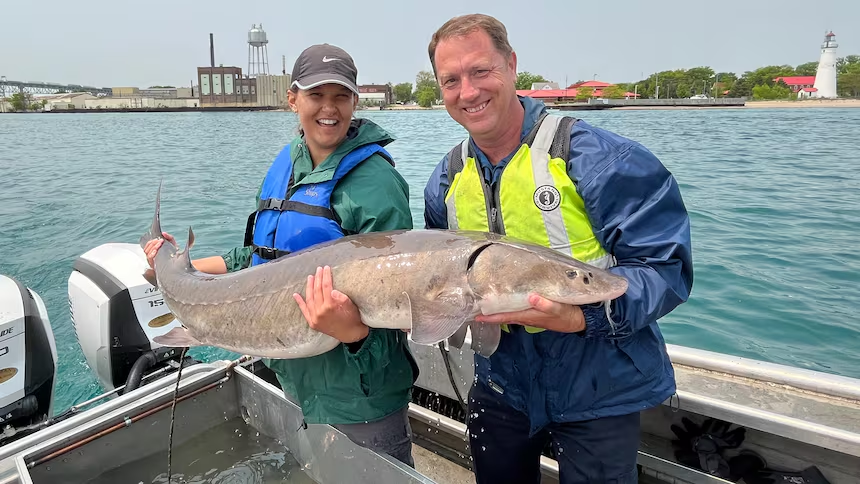
Lake sturgeon in the Great Lakes may live for more than 400 years, far longer than previously believed, according to new research that could reshape efforts to restore the threatened species.
The findings suggest some sturgeon swimming in the Great Lakes today could have been alive when French explorer Samuel de Champlain reached Lake Huron more than four centuries ago.
Researchers reached the conclusion after analysing more than four decades of data involving lake sturgeon that were caught and later recaptured across the Great Lakes. The evidence indicates the fish can survive for extraordinary periods, making them among the longest-lived freshwater species.
The discovery comes as conservationists continue efforts to rebuild lake sturgeon populations that were devastated by human activity.
Lake sturgeon can grow to about two metres in length and weigh as much as 180 kilograms. Their armoured bodies and ancient appearance have earned them comparisons to prehistoric fish, but their remarkable longevity has not protected them from population declines.
READ ALSO: First Lady Pushes NIN Registration for Better Planning
In Ontario, lake sturgeon are classified as a species at risk, while populations in the Great Lakes are considered endangered.
Overfishing and the destruction of spawning habitat are estimated to have eliminated about 99 per cent of the species’ historic population. Although conservation programs have helped some populations recover, the new research suggests that rebuilding sustainable numbers could take considerably longer than previously expected.
In several parts of the Great Lakes, conservation efforts still depend on people raising young sturgeon in hatcheries and releasing them into the wild.
The researchers say the fish’s long lifespan means conservation strategies must take into account the unusually slow pace at which populations can naturally rebuild. Older sturgeon can reproduce over many years, but replacing generations lost through historical overfishing is a lengthy process.
The study also highlights the importance of protecting spawning grounds and ensuring adult fish survive long enough to reproduce.
For conservationists, the discovery of the sturgeon’s extraordinary lifespan presents both an opportunity and a challenge. Long-lived adults can potentially contribute to population recovery for decades, but the loss of mature fish can also have consequences that persist for generations.
The research provides a new perspective on a species that has survived for centuries while facing dramatic changes to its environment.
With some lake sturgeon potentially living longer than 400 years, scientists say their recovery should be viewed as a long-term conservation project rather than a quick return to historic population levels.