

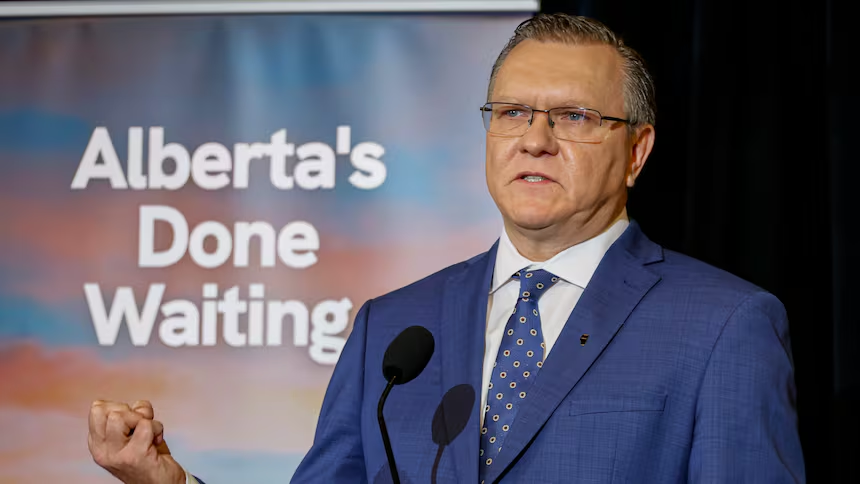
An Alberta independence group has released a 214-page transition plan outlining how the province could operate as a sovereign country if voters eventually choose to separate from Canada.
The Alberta Transition Council released the document Thursday, presenting proposals covering government, social services, transportation, constitutional arrangements and relations with First Nations in the event of a future vote for independence.
The report is intended to provide a framework for managing Alberta’s potential exit from Canada and identifies areas where authority would have to shift from Ottawa to a new Alberta government.
Lawyer Keith Wilson, who leads the Alberta Transition Council and is also associated with the independence group Let Alberta Decide, said the objective is to demonstrate that Alberta could pursue separation through an organised and negotiated process.
RAED ALSO: First Lady Pushes NIN Registration for Better Planning
The proposed transition would involve negotiations with the federal government over a wide range of responsibilities currently administered under Canada’s national system.
Among the issues examined are the continuation of social programs, air traffic control, the creation of a new constitution and the future relationship between an independent Alberta and First Nations.
The report does not itself trigger an independence process or establish a timetable for Alberta leaving Canada. Instead, it sets out the council’s vision for what could happen if Albertans eventually vote “yes” to sovereignty.
The release comes amid continuing debate within Alberta over the province’s political and economic relationship with the federal government.
Supporters of independence have argued that Alberta should have greater control over its resources, taxation and policy decisions, while opponents have raised questions about the economic, legal and political consequences of leaving Canada.
The transition plan attempts to address some of those practical questions by examining institutions and regulations that would need to be transferred, replaced or renegotiated.
A particularly significant aspect of the proposal would be negotiations with Ottawa over the division of responsibilities, assets and obligations between Alberta and the rest of Canada.
The document also recognises that independence would involve more than establishing a new government. It would require decisions on how essential services are maintained and how Alberta interacts with neighbouring provinces, the federal government and Indigenous nations.
Wilson said the council’s aim is to ensure that any potential departure would be orderly rather than disruptive.
The release provides independence advocates with a detailed framework for further discussions, while leaving the ultimate decision on Alberta’s constitutional future with voters.
For now, Alberta remains a province of Canada, and any move toward sovereignty would require a political process and negotiations extending well beyond the proposals contained in the council’s report.