
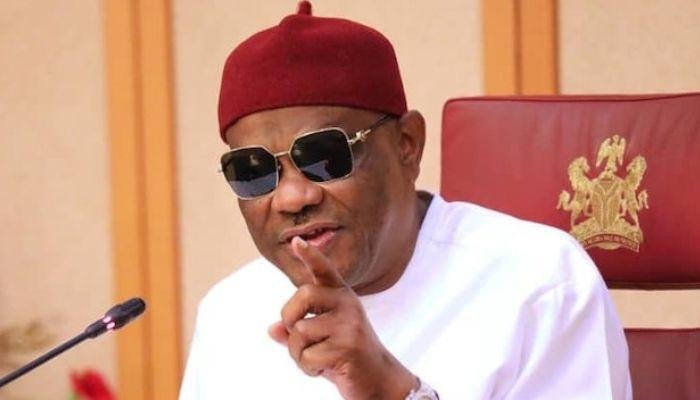
Here is a detailed month-by-month timeline of key events, actions, and controversies involving Nyesom Wike during 2025 as gleaned from public media reporting. The timeline captures infrastructure efforts, policy decisions, political flashpoints and public statements over the course of the year.
January 2025
- At the start of the year, Wike continued pressing for compliance from land allottees in the Federal Capital Territory Administration (FCTA), warning that revoked land allocations would be re-assigned if outstanding payments were not settled.
- During inspections of several construction projects including major road works he reaffirmed the administration’s resolve to optimize land use and enforce payment of ground rents.
February 2025
- No major public headline linked exclusively to Wike in February emerges in the media record. This may suggest a relatively quiet month, or a period of behind-the-scenes planning and budget finalization leading toward spring.
March 2025
- On 13 March 2025, Wike formally revoked the land right of the national secretariat of the Peoples Democratic Party (PDP), citing the party’s failure to pay ground rent for nearly two decades (from 2006 to 2025).
- The revocation notice addressed to PDP’s national leadership referred to a prime plot (Plot No. 243, Central Area, Abuja) and indicated that the FCT Administration would take immediate possession.
- This move was part of a broader land-title purge: in total, 4,794 land titles across Abuja were revoked for non-payment of ground rent, including institutions and private landholders.
- Also around this period, Wike submitted the 2025 FCT budget for approval. He cautioned that although the 2024 budget had been extended into mid-2025, the new fiscal year would likely bring funding challenges.
April 2025
- In April, Wike announced that the FCT had recorded a “95 percent budget performance” on the 2024 budget a claim he said marked an unprecedented level of project delivery for the territory.
- He expressed satisfaction with quality of works notably citing progress at the International Conference Centre, Abuja (ICC) and various road projects.
May 2025
- On 22 May, while defending the 2025 statutory budget before the National Assembly committees on FCT, Wike said a large portion of the proposed N1.78 trillion would be allocated to capital projects, especially road infrastructure. He earmarked completion of 14 ongoing major road projects across the territory.
- The roads identified for completion spanned both city-centre and satellite towns including arterial roads, expressways, and rehabilitation of important connectors.
- Wike framed this as a push to relieve traffic gridlock and improve connectivity across Abuja.
- Also in May, Wike dismissed criticism that his administration was overly focused on roads at the expense of other sectors. He reminded the public that over 60 schools had been renovated in less than two years, insisting that “no sector will be left abandoned.”
June – July 2025
- There is no widely-reported “big splash” by Wike in June or July 2025. Given the earlier budget submission and mid-year review, these months may have involved project mobilization, contracting, or preliminary engineering works processes that often receive less media fanfare.
September 2025
- In mid-September, Wike scheduled the flag-off of 12 new road projects including roads in various districts of the Federal Capital City, and installation of solar streetlights under the “Light Up Abuja” programme.
- The move emphasized not only expansion of road networks but also improvements in urban infrastructure and public lighting, aiming to enhance safety and convenience for residents.
October 2025
- On 3 October, Wike officially flagged off the construction of a major road linking Wuse District to the Central Area (Transit Way/N2) and simultaneously announced plans to rehabilitate at least 40 additional schools in the territory.
- Just a few days later, on 7 October, he flagged off the rehabilitation of the 15-kilometre Old Keffi Road (from Kado Village to Dei-Dei). The project had been long promised, and Wike described its commencement as fulfilment of prior commitments to residents and traders.
- During this period, Wike reiterated that education, roads, and health remain central priorities signaling that infrastructure delivery would not be limited to transportation alone.
November 2025
- Late November saw Wike inspecting multiple major infrastructure sites. On 27 November, he briefed journalists on progress of critical road projects: the emergency reconstruction of Karu road, the two-carriageway sections of the Outer Southern Expressway (OSEX), and the Katampe CN2 collector road. These were all slated for completion by mid-2026.
- As part of this, Wike confirmed that a previously abandoned 13.2 km road project the Apo–Karshi Road (originally awarded in 2011) had been terminated and re-awarded to a new contractor for expedited completion to decongest Abuja-Keffi expressway.
- On the education front, Wike’s administration disowned a viral circular that purported to order closure of all public secondary schools in Abuja by 28 November. Wike denied authorizing any shutdown, calling the circular “unauthorised,” and ordered the immediate suspension of the FCT Mandate Secretary for Education pending disciplinary action.
- He insisted there was no security threat justifying such a closure, and affirmed that the academic calendar remained unchanged.
December 2025 (Lead-up / Outlook)
- As 2025 closed, Wike and the FCTA signaled that many of the road and infrastructure projects especially those flagged off or re-awarded in late 2025 are targeted for completion in 2026.
- The administration emphasized prioritizing completion over launching new initiatives, hinting that 2026 would likely be a consolidation year for ongoing works rather than a year of fresh beginnings.
- Wike also reaffirmed intent to expand health-sector interventions under the 2025 capital budget though he appealed for patience, noting resource constraints and the need for phased implementation.
Key Themes & Analysis
1. Infrastructure First: Roads, Connectivity and Renewal
Throughout 2025, Wike clearly prioritized expansion and rehabilitation of roads across the FCT. From the formal budget allocation for 14 major projects (May) to flag-offs of new roads and expressways (September–November), the emphasis was on reducing traffic bottlenecks, improving connectivity, and decongesting satellite towns.
The rehabilitation of long-pending roads such as the 15 km Old Keffi Road demonstrated a commitment to fulfilling prior promises and delivering long-delayed infrastructure.
By late November, Wike underscored that many of these projects would be completed by mid-2026, suggesting a sustained push rather than a one-off spree.
2. Renewed Focus on Education + Public Services
Though roads dominated headlines, Wike did not ignore other sectors. By May 2025, he pointed out that over 60 schools had already been renovated, pushing back against claims of bias toward roadworks.
In October, the FCT government committed to rehabilitating at least 40 more schools adding to a larger pool of ongoing education projects.
This expansion suggests that Wike sees education as complementary to infrastructure: roads improve accessibility to schools, and functional schools support human development even as the capital transforms physically.
Also, toward year-end, there was renewed promise to use the 2025 health-sector allocation though Wike asked for “time” to ensure proper rollout, reflecting the realities of funding and prioritization.
3. Assertive Governance: Land-Use Enforcement & Institutional Clean-up
One of the most consequential and controversial acts of 2025 was the mass revocation of land titles across Abuja. The decision to revoke lands belonging to institutions (including the secretariat of the PDP) over decades-long unpaid ground rents marked a strong stance on land-use compliance and statutory obligations.
By doing so, Wike signalled that the FCTA under his watch would no longer tolerate default or neglect, even among powerful stakeholders. This is a governance posture with both symbolic and practical significance.
4. Crisis Management & Reputation Control
Wike’s handling of the November school-closure debacle reflects a readiness to act quickly when administrative lapses threaten to undermine public confidence. By disowning the circular, suspending responsible officials, and reassuring the public, he sought to contain panic and preserve institutional integrity.
Such responsiveness may help burnish his image as an active, hands-on minister contrasting with stereotypes of bureaucratic inertia.
5. Political Overtones and Institutional Repositioning
Although the 2025 timeline is dominated by infrastructure and administrative actions, some decisions have obvious political resonance notably the land revocation affecting the PDP national secretariat. That move carried symbolic weight, given Wike’s past affiliation with PDP and his prominence within Nigerian politics.
The revocations suggest that under Wike, FCT land policy might be leveraged for institutional cleansing and assertion of authority, regardless of historical or political status.
Additionally, the decision to rehabilitate neglected infrastructure and deliver tangible results underlines a recalibration of priorities: from party-based politics to technocratic, service-delivery oriented governance.
What’s at Stake — Risks and Opportunities
✅ Opportunities & Potential Gains
- Legacy Building: If the many flagged-off road and school projects are completed on schedule, Wike could leave behind a transformed Abuja improved roads, better school infrastructure, and enhanced connectivity across satellite towns.
- Improved Quality of Life: For residents, the infrastructural upgrades could translate to reduced travel time, easier access to education, and better public services.
- Institutional Discipline: The land-use enforcement may encourage compliance and strengthen rule of law in Abuja’s real estate market, potentially curbing speculative defaults and reclaiming idle lands for productive use.
- Political Rebranding: Wike’s shift from regional/state politics to a national-level technocrat can redefine his public profile, positioning him as a results-oriented administrator rather than just a partisan figure.
⚠️ Risks & Challenges
- Implementation Bottlenecks: Delivering on an ambitious slate of 14 major roads, dozens of school rehabilitations, and health-sector promises depends on funding, contractor reliability, and bureaucratic follow-through. Delays could erode public trust.
- Public Backlash over Land Revocations: Evicting defaulting landholders even long-standing ones can spark social and political unrest, especially if due process is perceived as weak or arbitrary.
- Perception of Political Motives: Moves like revoking party lands especially for a former PDP heavyweight may be painted as vendetta or political retribution, potentially undermining claims of impartial governance.
- Sustainability Concerns: Infrastructure growth must be matched with maintenance culture. There’s a risk that new roads and buildings may decay fast if maintenance is neglected.
Conclusion: 2025 — A Year of Bold Moves and Big Promises
Over the course of 2025, Nyesom Wike’s tenure as FCT Minister has been defined by action lots of it. From budget submissions and road-project allocations to land-title revocations and school rehabilitation drives, the bulk of his energy seems to have gone into reshaping Abuja’s physical and institutional landscape.
More than before, the narrative around Wike this year is less about politics and more about governance: hard infrastructure, tangible public-service improvements, and (at least in intent) enforcement of rules. If the 2025 projects are delivered as promised and if follow-up ensures sustainability this could mark a turning point for the FCT.
At the same time, however, the speed and scope of changes carry inherent risks. Land-use enforcement especially when involving major institutions is always politically sensitive. The success of Wike’s 2025 campaign will depend on balance: delivering concrete results while preserving legitimacy, trust, and social stability.
As 2026 looms, the real test begins: turning flag-offs and budgets into smooth roads, functional schools, and lasting institutional order.