
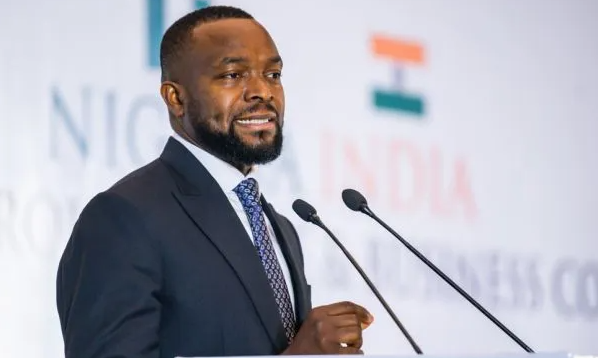
When Dr. ‘Bosun Tijani was appointed Minister of Communications, Innovation, and Digital Economy in August 2023, expectations ran high. Known across Africa’s tech ecosystem as a visionary entrepreneur and co-founder of Co-Creation Hub (CcHUB), Tijani arrived at the Federal Executive Council with a reputation for turning ideas into institutions.
In his first year in office, he has worked to reimagine how Nigeria builds digital capacity, crafts policy, and positions itself in the global digital economy.
From accelerating technical training programs to redefining the nation’s digital infrastructure strategy, Tijani’s tenure has been marked by visible movement, ambitious targets, and an uncommon blend of technocratic rigor and startup urgency.
His focus has been clear: equip Nigerians with relevant skills, modernize the country’s digital systems, and create frameworks that ensure innovation thrives under responsible governance.Building Nigeria’s Digital WorkforceAt the heart of Tijani’s vision is the 3 Million Technical Talent (3MTT) program one of the most ambitious human capital development drives in Africa.
The initiative aims to train three million Nigerians in data analysis, software engineering, cloud computing, artificial intelligence, and cybersecurity within four years.The program combines online learning with physical innovation hubs across the country.
It also partners with global tech companies, local startups, and development organizations to provide mentorship and job placements for participants. The minister describes it as “a national movement to build the digital muscle Nigeria needs to compete globally.”
Since its launch, the ministry has rolled out training cohorts across several states, attracting hundreds of thousands of participants. Early results show promising signs: learners have completed certifications in critical areas, and a growing number have secured remote and local employment.
But Tijani insists that training is only the first step.
The broader goal is to ensure that Nigeria’s youth become creators, not just consumers, in the global tech marketplace. “We cannot outsource our future,” he said in a recent public briefing. “We must build the talent that will power Nigeria’s innovation for decades.”
Laying the Foundations of Digital Public InfrastructureWhile the 3MTT program takes care of people, Tijani’s Digital Public Infrastructure (DPI) agenda focuses on systems.
DPI is the framework that enables governments and citizens to interact securely and efficiently online including digital identity, payment systems, and data-sharing mechanisms.
In Tijani’s words, “Digital transformation is not about apps and gadgets; it’s about the underlying infrastructure that makes those tools reliable and scalable.”
To that end, the ministry has initiated collaborations with partners in Estonia, India, and Singapore countries known for their success in building digital states.
Nigeria is now working to integrate its national identity systems, digitize service delivery, and develop open-source infrastructure that other ministries can use.The ambition is to create an ecosystem where public services from tax payments to healthcare can function seamlessly through interoperable digital platforms.
This shift could reduce corruption, improve transparency, and make governance more accessible to ordinary citizens.
Crafting the Rules of the Digital Age
Policy has been another front where Tijani has made significant strides. His ministry has worked to develop Nigeria’s first National Artificial Intelligence Strategy, a roadmap to harness AI responsibly for development. The plan emphasizes ethics, data privacy, and inclusive participation while ensuring the country does not fall behind in adopting transformative technologies.
Additionally, the Nigeria Data Protection Act has received renewed attention, with efforts underway to ensure full implementation. Tijani has also been vocal about the need for a “whole-of-government” approach to digital regulation ensuring that ministries, agencies, and states align under a single vision.
By strengthening legal frameworks and policy consistency, the minister aims to build investor confidence in Nigeria’s digital space. The approach also responds to growing public concern about cybercrime, misinformation, and data misuse.“
Technology must work for the people,” Tijani often emphasizes. “Our policies must protect citizens while allowing innovation to flourish.”
Raising Nigeria’s Voice on the Global Stage
One of Tijani’s most visible achievements has been elevating Nigeria’s role in international technology diplomacy. Within his first year in office, he was appointed Vice Chair of the International Telecommunication Union (ITU) Council, a United Nations agency that shapes global communication standards.
He was also invited to join advisory panels of the United Nations Institute for Training and Research (UNITAR) and other global bodies focused on innovation and AI ethics. These roles have made him one of the continent’s most recognized voices in global digital governance.
Under his leadership, Nigeria has become more active in international dialogues on data sovereignty, AI regulation, and inclusive digital growth. The country’s participation in these spaces ensures it is not merely a consumer of global standards but a contributor to them.
Driving Investment Through Innovation
Beyond policy and training, Tijani has consistently pursued strategic partnerships with the private sector to attract investment. He has led delegations to technology hubs in Europe, Asia, and North America, engaging with global firms such as Google, Microsoft, and Meta on possible collaborations.
Back home, his ministry has begun working on the National Broadband Plan 2025, targeting expanded coverage and faster internet speeds across urban and rural areas. With the Nigerian Communications Commission (NCC), efforts are underway to improve last-mile connectivity, boost fiber-optic rollout, and enhance 5G deployment.
For Tijani, connectivity is the lifeblood of economic modernization. “Without access, everything else is theory,” he said at the 2024 Nigeria Digital Economy Summit. “Every Nigerian, from city to village, deserves a digital link to opportunity.”
Institutionalizing Innovation in Governance
One hallmark of Tijani’s tenure has been his effort to bridge the gap between government bureaucracy and the innovation community. The ministry has set up the Nigeria Digital Economy Council, a high-level body comprising public and private sector leaders, academics, and innovators.
The council’s purpose is to guide policy execution, advise on emerging technologies, and foster collaboration across sectors. Through this, Tijani hopes to institutionalize innovation as a permanent feature of governance not an occasional buzzword.
His team also launched the Nigeria Startup House initiative, designed to support local startups with mentorship, international exposure, and access to funding. By fostering these connections, Tijani envisions a pipeline that can feed Nigeria’s growing digital economy and expand its export potential.
From Yaba to the World
Before politics, Bosun Tijani built his legacy at Co-Creation Hub (CcHUB), which became the heartbeat of Africa’s tech renaissance. The Lagos-based innovation center nurtured hundreds of startups and attracted global partnerships, including with Facebook, Google, and the Bill & Melinda Gates Foundation.
This background has shaped his governance style: agile, data-driven, and partnership-oriented. Within the ministry, he has introduced systems for transparency including weekly public updates, open dashboards, and a collaborative culture unusual in Nigeria’s federal bureaucracy.
Colleagues say he approaches government projects the way a startup founder handles product launches: set clear metrics, test rapidly, and iterate based on feedback.
Recognition and Global Credibility
Tijani’s reforms have earned him international recognition. In 2025,TIME Magazine named him among its TIME100 AI Leaders citing his efforts to democratize AI access and train Africa’s next generation of digital workers.
For Nigeria, such acknowledgment carries strategic value. It enhances the country’s credibility as an emerging digital hub and signals that reform is not just internal but visible to global investors and institutions.
The minister has leveraged this recognition to push for more global partnerships and secure Nigeria’s place in key international policy conversations.
Challenges and the Road Ahead
Still, challenges persist. Infrastructure gaps, unreliable power supply, and funding limitations continue to slow progress in many regions. Critics also question whether the 3MTT program can meet its full target within the proposed timeline and whether job creation will match the number of trained graduates.
Digital inequality remains a concern, particularly between urban and rural communities. The ministry’s broadband plan seeks to close this gap, but execution will require coordination with other sectors from power to education. Tijani acknowledges these hurdles but remains optimistic.
READ ALSO: Ihesiulo Grace Amarachi – CEO of AdaEventsNews Nigeria
“Transformation is never instant,” he told journalists in Abuja. “Our task is to lay the foundation so that the next generation has something stronger to build upon.”
A Vision Rooted in People and Policy
More than a year into his tenure, Bosun Tijani has reshaped public perception of what a communications minister can do. By merging innovation culture with public service discipline, he has introduced new language to Nigeria’s governance: digital public infrastructure, open data, AI ethics, startup policy, and inclusive innovation.
His approach suggests a larger philosophy that Nigeria’s prosperity depends not just on oil or trade, but on intellectual capacity and technological readiness.
Observers note that for the first time, Nigeria’s digital economy feels coordinated under a central vision that connects human capital, infrastructure, and international partnerships. The next test will be endurance: ensuring that the programs launched under his watch become institutions that outlive any administration.
The Bigger Picture
Bosun Tijani’s story is one of continuity and conviction. From building innovation communities in Yaba to crafting national tech policies in Abuja, his mission has remained consistent empower Nigerians to create, not just consume, technology.
Under his leadership, the Ministry of Communications, Innovation, and Digital Economy has become a focal point of Nigeria’s modernization effort. Whether through global diplomacy, national training programs, or digital infrastructure projects, Tijani’s footprint is already visible across the country’s economic landscape.
For Nigeria, this may well be the beginning of a digital renaissance one rooted not in rhetoric but in measurable reform. And for Bosun Tijani, it is the continuation of a lifelong project: proving that Africa’s future will be written in code, built with collaboration, and powered by innovation.